



I recently attended a family gathering where the conversation turned to holiday plans. The adults debated destinations, weighing up cultures, climates and costs. What struck me most was the children’s enthusiasm: they were fully engaged, sharing thoughtful reasons for favouring particular countries.
Yet, while the parents had glossy travel brochures packed with stunning images and itineraries, nothing was designed specifically for the children. The travel industry speaks confidently to adults, yet rarely invites children into the journey of discovery before they even board the plane.
This observation prompted me to consider how we can better support travel education for children aged 6 to 11. As the creator of the Can Do Kids Band stories, I saw an opportunity to move beyond traditional geography lessons and develop an imaginative, experience-based approach to help young learners understand the world.
Meeting the Band: Global Roles in Discovery
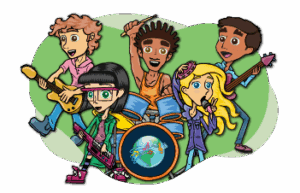 The Can Do Kids Band features five relatable characters from around the world, each with a unique cultural background and skill:
- Ace from South Africa: As the drummer, Ace provides the heartbeat and rhythm of the group. He helps students connect with the pulse of a nation, its festivals and the energy of its people.
- Amy from the USA: A versatile vocalist, Amy uses her voice to tell the stories of the places they visit. She encourages students to communicate, share their feelings and find their own voices in a global context.
- Lin from China: A wizard on the keyboards, Lin represents the fusion of tradition and modern technology.
- Ravi from India: As the cool bass guitarist, Ravi encourages students to look at the underlying structures of society, its values and its long-standing traditions.
- Oz from Australia: The adventurous lead guitarist, Oz is always ready to explore the great outdoors. He leads the way in discovering wildlife, natural wonders and the importance of environmental conservation.
Students also have the opportunity to ask Ace, Lin, Amy, Ravi and Oz questions about their experiences. This interactive dialogue encourages curiosity, reflection and deeper engagement.
The Students of Tomorrow: Global Awareness and the Environment
Today’s students are tomorrow’s global citizens. To prepare them for the future, they must be globally aware and understand how they constitute a vital part of the global community. Travel education is a primary way to achieve this, whether it is conducted virtually or through actual physical journeys.
 Environmental stewardship is woven throughout:
- The Travel Footprint: Students examine how we can explore the world while protecting the natural beauty and ecosystems of the places we visit.
- Global Responsibility: By seeing environmental challenges in different climates, students understand that protecting the planet is a shared international mission.
- Informed Future Leaders: Viewing themselves as informed guardians of the world they are discovering, whether using the app or visiting in person.
Partnering with Industry: Beyond “Just a Holiday”
There is a clear need to link with and work alongside tourism boards and travel companies to help students become more involved and aware. Travel is more than “just a holiday”. Travel is an educational experience.
By collaborating with the travel industry, we can provide:
- Curated Educational Itineraries: Transforming standard tourist routes into discovery trails that align with school subjects.
- Authentic Local Access: Ensuring students interact with local experts, from conservationists to historians.
- A Shift in Perspective: Encouraging travel companies to speak directly to the younger generation, fostering a sense of ownership over their journey.
Quest-Based Learning
Quests bring history and achievement to life. Rather than memorising facts, students “travel” to uncover stories. For example:
- Visiting William Shakespeare in his hometown of Stratford-upon-Avon to discover where he wrote his plays and how his environment influenced his storytelling.
- Exploring the life and music of Édith Piaf on a visit to Paris and understanding where her most famous songs were performed.
- Investigating how Michael Faraday made ground-breaking discoveries in London and how scientific breakthroughs often emerge from curiosity and persistence.